Food products are highly sensitive to humidity. Even small changes in moisture levels can affect product quality and storage performance.
When moisture is not controlled properly, food products may:
- lose their crispness or texture
- absorb moisture and become sticky
- form clumps or hard lumps
- develop mold or bacteria
- spoil faster during storage or transport
- suffer packaging damage due to condensation
For businesses, these issues can lead to:
- reduced shelf life
- product waste
- damaged packaging
- customer complaints and returns
- higher storage and logistics risks
This is why moisture control is such an important part of food production, storage, and export.
What Is a Silica Gel Desiccant?
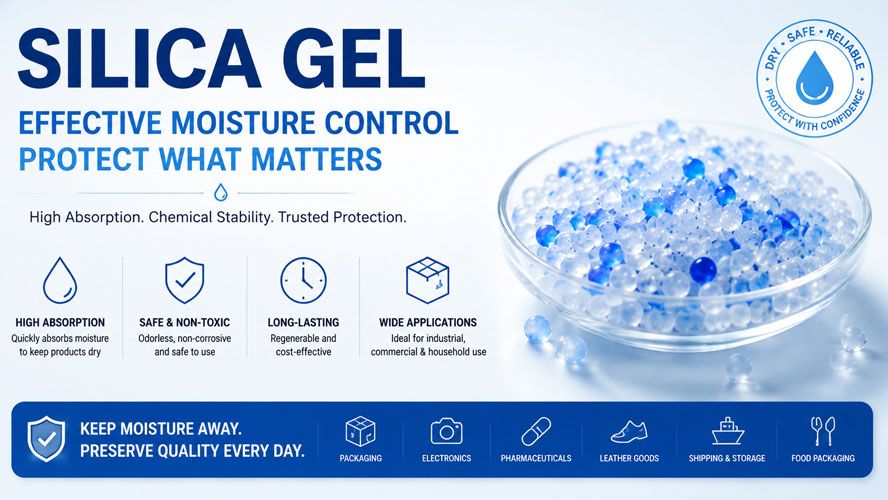
A silica gel desiccant is a moisture-absorbing material used to keep products dry.
It is made from silicon dioxide (SiO₂) and contains a large number of tiny pores that trap water vapor from the air. Instead of soaking up liquid like a sponge, silica gel works by adsorbing moisture onto its surface.
Because of its strong moisture absorption ability, silica gel is widely used in the food industry to help:
- reduce humidity inside packaging
- prevent condensation
- protect dry food products
- improve storage stability
- extend shelf life
How Silica Gel White Beads Work
Silica gel white beads are one of the most common forms used in food-related applications.
Each bead contains millions of microscopic pores that capture moisture from the surrounding air. This helps create a dry environment inside sealed packaging, storage spaces, or shipping containers.
Silica gel white is often preferred because it is:
- clean in appearance
- chemically stable
- non-corrosive
- easy to pack into sachets or bags
- suitable for food packaging and storage applications
It is widely used for products that need to stay dry during storage, transport, and retail display.
Common Food Industry Problems Caused by Moisture
1. Dry Foods Lose Their Texture
Products such as:
- crackers
- biscuits
- chips
- cereals
- snack foods
can quickly become soft or stale when exposed to humid air.
2. Powders and Granules Start Clumping
Moisture can cause products like:
- milk powder
- coffee powder
- flour
- sugar
- spices
- seasoning blends
- protein powder
to cake, harden, or form lumps, which affects both product quality and packaging efficiency.
3. Mold and Microbial Growth Increase
High humidity creates a better environment for:
- mold
- yeast
- bacteria
This increases the risk of spoilage, contamination, and shelf-life problems.
4. Condensation Damages Packaging
In storage rooms and shipping containers, temperature changes can create condensation.
This can lead to:
- wet cartons
- damaged labels
- weakened packaging
- moisture entering the product
For exporters, this is especially risky during long-distance sea shipping.
Main Applications of Silica Gel Desiccants in the Food Industry
1. Food Packaging
One of the most common uses of silica gel is inside food packaging.
A silica gel desiccant packet helps absorb moisture trapped inside the package after sealing. This creates a dry micro-environment that protects the product during storage and distribution.
Common packaging applications include:
- dried foods
- baked snacks
- jerky
- seaweed
- spices
- health supplements
- powdered drink mixes
- pet food
- bottled or jarred products
For products sold in humid climates, desiccant packets can make a big difference in shelf-life performance.
2. Food Processing Areas
During production, food products may be exposed to air before final packaging.
If humidity is too high, products can absorb moisture quickly, especially in:
- baking lines
- snack food production
- powder filling lines
- seasoning blending
- candy and confectionery processing
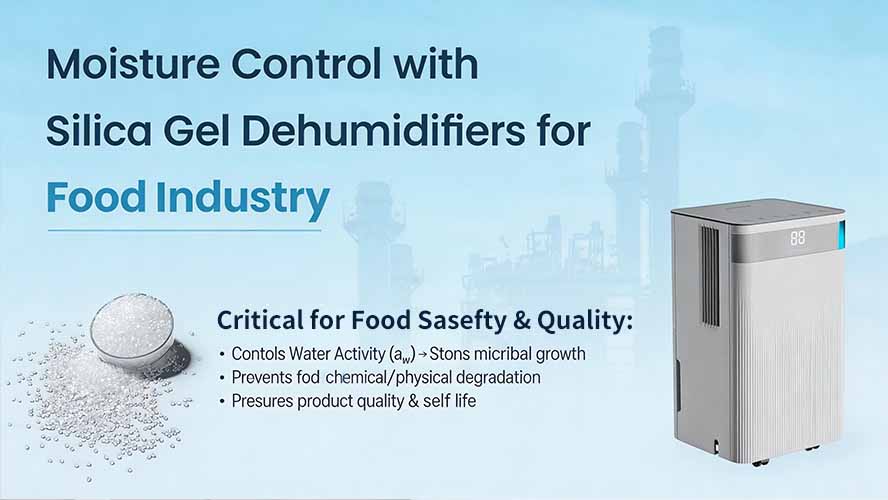
Using silica gel dehumidification or dry-air control helps maintain more stable conditions and protects product quality during production.
3. Warehouses and Storage Rooms
Many food products leave the factory in good condition but become damaged later because of poor storage humidity.
Silica gel and desiccant-based moisture control are often used in:
- dry food warehouses
- ingredient storage rooms
- raw material storage areas
- finished goods storage
- cold chain support areas
This is especially important for:
- grains and cereals
- flour and starch
- sugar
- dried fruit
- nuts
- powdered ingredients
- nutritional products
4. Shipping Containers and Export Logistics
For international shipping, humidity changes during transport can cause serious condensation problems, often called container rain.
This can damage both products and packaging.
Container desiccants or large silica gel bags are often used to protect:
- export cartons
- bulk food ingredients
- packaged food products
- retail-ready goods
- long-distance shipments by sea
This is a simple and effective way to reduce moisture-related losses during transit.
Benefits of Using Silica Gel Desiccants for Food Products
Helps Extend Shelf Life
By controlling moisture, silica gel helps food stay fresher for longer.
Protects Product Quality
It helps maintain:
- texture
- crispness
- flavor
- appearance
- powder flowability
Reduces Mold and Spoilage Risk
A drier environment lowers the chance of microbial growth and moisture damage.
Prevents Clumping and Caking
This is especially important for powders, granules, and dry ingredients.
Supports Better Packaging Performance
Silica gel helps reduce condensation inside sealed packs, bottles, jars, and cartons.
Reduces Losses During Storage and Shipping
Better moisture control means fewer damaged products, fewer returns, and lower overall risk.
Why Silica Gel White Is Popular in Food Applications
Among different desiccant materials, silica gel white remains one of the most widely used in the food industry because it offers a practical balance of:
- strong moisture absorption
- clean and stable performance
- easy packaging integration
- wide application range
- cost-effectiveness
For many food businesses, it is a reliable everyday solution for moisture protection.
Tips for Choosing the Right Silica Gel for Food Use
When selecting silica gel desiccants for food applications, it is important to consider:
- product type (snacks, powders, supplements, dried foods, etc.)
- package size
- required shelf life
- storage environment
- shipping conditions
- humidity level in target markets
Common formats include:
- small desiccant sachets for retail packaging
- silica gel bags for bulk packaging
- container desiccants for export shipping
- bulk silica gel for industrial moisture control systems
Choosing the right size and type can greatly improve moisture protection efficiency.
Final Thoughts
Moisture can quietly cause major problems in the food industry—from soft snacks and clumped powders to mold, condensation, and shipping damage.
That’s why silica gel desiccants are widely used across food packaging, production, storage, and logistics.
Whether you need to protect dry foods, powdered ingredients, supplements, or export shipments, silica gel white beads offer a simple, safe, and effective way to control humidity and reduce moisture-related risks.
If your goal is to keep food products dry, stable, and shelf-ready, silica gel remains one of the most trusted moisture control solutions available.